
What players say
Tile Path Logic Puzzle delivers a pure puzzle experience that respects the player's intelligence. The vanishing tile mechanic is simple to understand but creates surprisingly deep spatial challenges. The difficulty ramps up smoothly, introducing obstacles at a pace that feels fair. The minimalist design keeps focus on the puzzle, and the lack of timers or pressure allows for relaxed contemplation. This is an excellent choice for anyone who enjoys logic games that require patience and strategic thinking.
About this game
Core Puzzle Concept
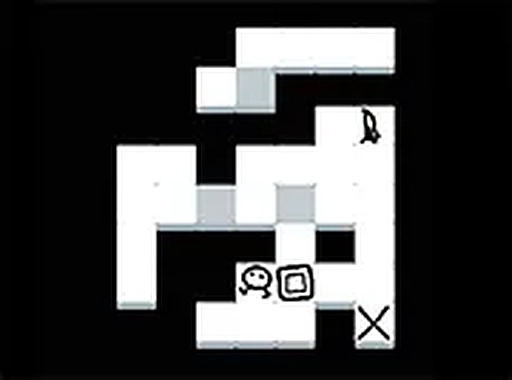
Tile Path Logic Puzzle presents a straightforward but demanding challenge. Players control a character on a grid where every tile disappears once stepped on. This simple rule transforms each level into a spatial reasoning exercise. You must visualize the entire path before making the first move, because a wrong turn can leave you stranded with no way forward. The game rewards careful observation and forward planning over speed or reflexes.
Level Progression and Obstacles
Early levels introduce the basic mechanic with open grids and clear paths. As you advance, new elements appear that require more careful sequencing. Gaps in the grid force you to approach from specific angles. Barriers block direct routes and require detours. Some levels include tiles that must be stepped on in a particular order. The difficulty curve is gradual, allowing players to build their planning skills before facing more complex layouts.
Visual Design and Controls
The interface is clean and uncluttered, with a color scheme that makes each tile type easy to distinguish. Controls are simple: use arrow keys or click to move. The game runs directly in a web browser with no downloads or registration. A full-screen mode is available for a more focused experience. The minimal design keeps attention on the puzzle itself, without distracting animations or sounds.
Strategic Approaches
Success depends on thinking several moves ahead. Before moving, scan the entire grid to identify the exit and any required tiles. Look for patterns that suggest a sequence. If you get stuck, restarting and trying a different approach often reveals a better solution. Breaking larger grids into smaller sections can make planning easier. The game encourages patience and systematic thinking rather than trial and error.





Player comments
Sign in to comment
You must be logged in before posting a review or rating.
No account? Create one
No comments yet. Be the first to comment!