
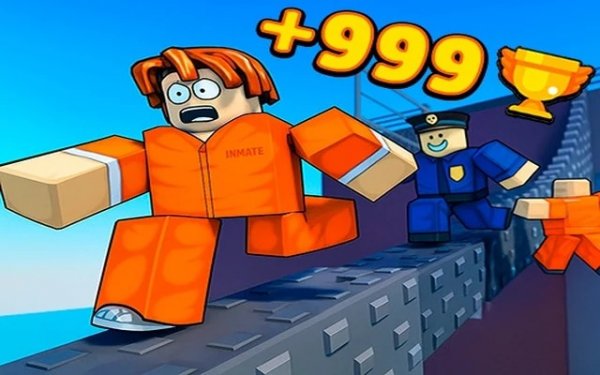
What players say
Parkour Gauntlet Rush stands out for its responsive controls and well-paced difficulty curve. The early stages teach basic mechanics, while later courses demand sharp reflexes and pattern memorization. The optional collectibles add a strategic layer, encouraging risk-taking for higher scores. Checkpoints on longer levels reduce frustration, letting players focus on mastering tough segments. The clean, colorful visuals make hazards easy to read, and the camera control helps with planning routes. This is a solid choice for anyone who enjoys reflex-based platformers and improving their own records.
About this game
Course Design and Hazards
Each stage in Parkour Gauntlet Rush presents a unique arrangement of obstacles that require precise timing and careful observation. You will encounter barriers that slide back and forth, sections of flooring that vanish after a moment, and rising columns of water that force you upward. Later stages combine these elements in increasingly complex patterns, demanding quick reactions and memorization of sequences. The environment is themed around a vibrant, cartoon-style world with distinct visual cues for each hazard type.
Controls and Movement
On a computer, you use the W, A, S, D keys to move your character and the spacebar to jump. The mouse lets you adjust the camera angle to see upcoming sections. On touchscreen devices, on-screen buttons handle movement and jumping, while dragging your finger changes the camera view. The controls are designed to feel responsive, allowing for precise jumps and quick direction changes. Maintaining momentum by chaining jumps together is important for achieving fast completion times.
Scoring and Collectibles
Throughout each course, you will find glowing items placed along alternative paths. These collectibles are optional but add to your overall score. Taking these routes often involves greater risk, as they may be near hazards or require more complex maneuvers. The game encourages you to weigh the benefit of a higher score against the potential for a mistake that could slow you down. Your final time and collected items are recorded after each run.
Progression and Checkpoints
The stages are arranged in order of increasing difficulty, starting with simpler layouts that introduce basic mechanics. Longer courses include checkpoints that save your progress at certain points. If you fall or hit a hazard, you restart from the last checkpoint rather than the beginning of the stage. This system helps you practice difficult sections without repeating earlier parts. The game tracks your best times and scores for each stage, allowing you to revisit and try to improve your performance.
Tips for Improving Performance
Learning the pattern of each obstacle is key to planning an efficient route. Watch how barriers move and note when platforms disappear. Adjust the camera angle frequently to spot hazards ahead. Practice chaining jumps to keep your speed up, especially on straight sections. When attempting to collect items, consider whether the risk is worth the potential score increase. Using checkpoints to isolate and practice tricky segments can help you master them more quickly.
Player comments
Sign in to comment
You must be logged in before posting a review or rating.
No account? Create one
No comments yet. Be the first to comment!